Types of Parking Lot Repairs Explained
As a starting point, it’s important to understand the three main levels of asphalt maintenance.
Localized Repairs (Crackfilling & Infrared Repairs)
Localized repairs are targeted fixes that address specific problem areas without replacing large sections of asphalt. A common misconception is that a large pothole or visible damage means the entire lot needs to be replaced—this is often not the case.
• Crackfilling involves applying hot rubberized sealant to cracks. This acts as a barrier, preventing water infiltration and slowing further damage caused by freeze-thaw cycles. It is best viewed as a preventative or “band-aid” solution.
• Infrared Repairs heat the existing asphalt, allowing it to be reworked and blended
seamlessly with new material. When done properly, these repairs can restore an
area to near-new condition and last for many years.
When applied early and consistently, these techniques can extend the life of a parking lot well beyond
the typical 10–15 year expectation.,
Resurfacing (Mill & Pave)
At a certain point, damage may become too widespread for simple repairs to be effective. The next step is determining whether the lot can be resurfaced or requires full reconstruction.
Mill and pave (also known as cold planing) is a resurfacing method that removes a portion of the existing asphalt—typically 25–75 mm—and replaces it with a new surface layer.
This option is appropriate when:
• The surface shows widespread wear or deterioration
• The underlying base remains structurally sound
• There are no clear signs of base failure
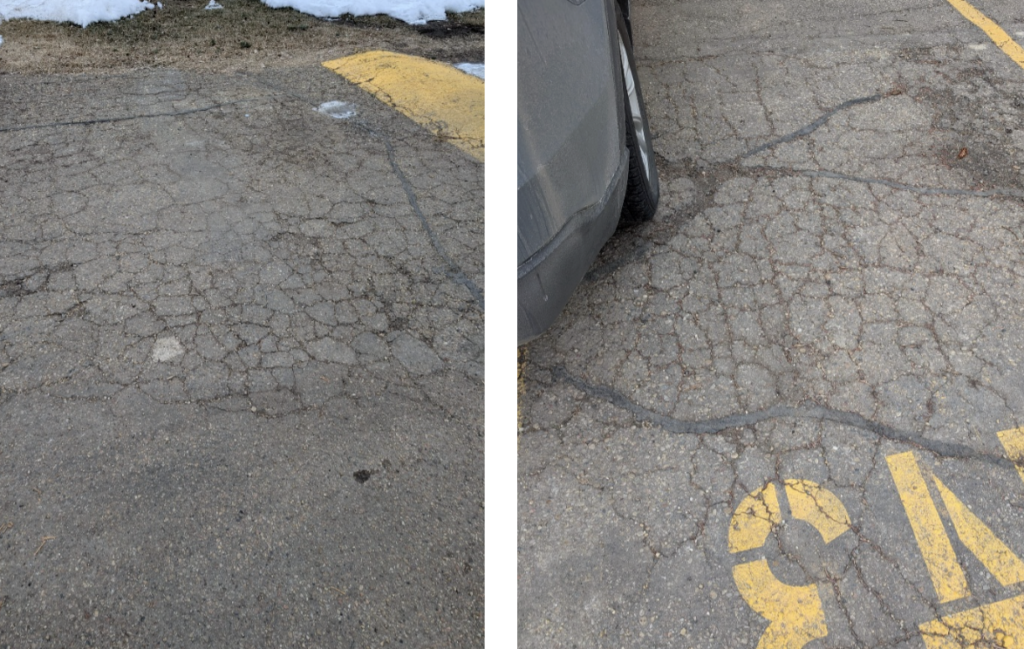
One key indicator to watch for is alligator cracking—a pattern of interconnected cracks resembling reptile skin. This typically signals base failure. If alligatoring is not present, resurfacing is often the most cost-effective solution.
Asphalt Resurfacing can also include adjustments to drainage features such as catch basins
and swales, allowing property managers to correct grading issues without the cost of full reconstruction.
Full Reconstruction (Remove & Replace)
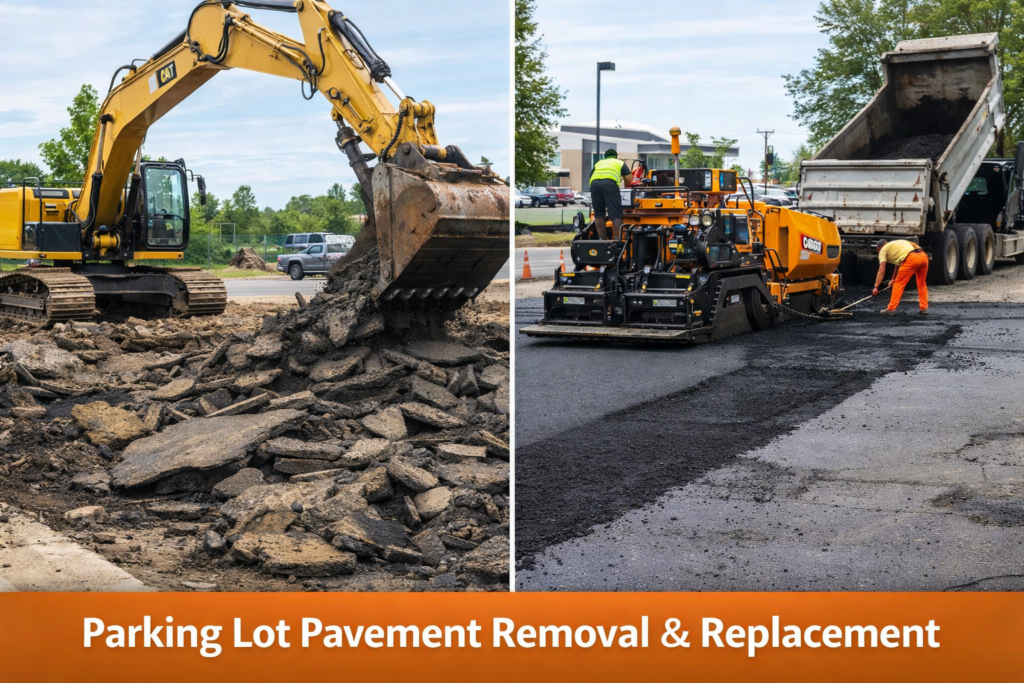
In some cases, full removal and replacement of the asphalt—and potentially the base—is unavoidable.
This is typically required when, there is extensive alligator cracking across the property, the pavement shows significant settlement or heaving, the base structure has failed and become exposed. When the base fails, surface-level fixes
will not last. Reconstruction addresses the root problem and provides a new, long-term solution.
1. Basework allowances: Alligator cracking almost always indicates base damage.
If base repair is not included in the estimate, expect costly change orders once work begins. Armadillo Asphalt always includes a budget for basework, if the budget isn’t used the final billing is lower than the estimate.
2. Approval for additional work: Ensure the contract specifies that no extra work will be completed without owner approval. This protects against unexpected costs and ensures proper oversight. Armadillo Asphalt will never do work beyond the initial scope without approval from the owner.
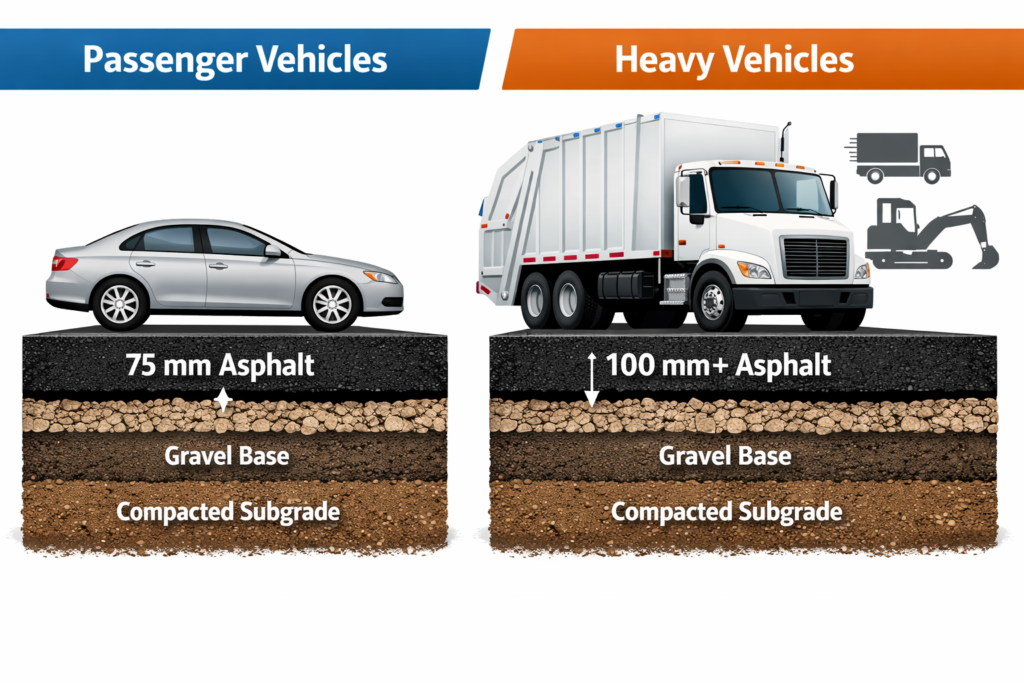
The intended use of the parking structure also matters. For example, 75 mm of asphalt is typically sufficient for passenger vehicles whilst heavier traffic (garbage trucks, delivery vehicles, or industrial use) may require 100 mm or more. In remove and replace situations, the design of an asphalt structure can allow for different depths in different areas. Say 75mm for most of the property, but 100mm in the main drive aisle where the garbage bins are accessed by the truck traffic.
The Importance of Proactive Planning
One of the biggest cost drivers in asphalt maintenance is timing. Properties that follow a proactive maintenance plan can significantly delay the need for major capital expenditures. Simply put, it is far less expensive to invest in regular maintenance than to fund a full remove and replace.
Best Practices
• Conduct periodic condition assessments, Armadillo Asphalt offers free assessments.
• Budget for ongoing maintenance, not just major projects
• Address small issues early before they escalate
• Work with experienced, reputable contractors for honest evaluations
Conclusion
There is no one-size-fits-all solution for parking lot maintenance. The right approach depends on the condition of the asphalt, the extent of damage, and the underlying structure.
• Repair early to extend lifespan
• Resurface when wear becomes widespread
• Reconstruct when the foundation has failed
Making the right decision at the right time will help property owners and managers minimize costs, maintain safety, and protect the long-term value of their asset.